


Carpentry Work – Costs & Examples at a Glance
- 1. What does a carpenter cost?
- 2. Hourly rates by qualification
- 3. Typical carpentry work & their costs
- 4. Kitchen construction & kitchen renovation
- 5. Parquet & wooden floors
- 6. Custom furniture & built-in wardrobes
- 7. Wooden façades
- 8. Roof structures & roof construction
- 9. Wooden windows & wood-aluminium windows
- 10. Carports & outdoor structures
- 11. Cost examples from real projects
Wood creates warmth, character, and a sense of home that no other building material can replace. At the same time, every project is different—whether it’s a new kitchen, a built-in wardrobe, parquet flooring, a roof structure, a wooden façade, or custom-made furniture. As a result, the costs of carpentry work vary greatly: from small repair jobs to complex interior construction projects.
In this article, you’ll find a compact overview of typical carpentry services in Switzerland, realistic cost examples, and the most important factors that actually determine your project price.
What does a carpenter cost?
Carpentry work is among the most versatile trades—ranging from small pieces of furniture to complete interior construction. Accordingly, prices vary widely. The most important cost factor is the hourly rate, which depends on qualification, region, and the use of machinery.
Hourly rates by qualification and machine work
Project manager (approx. CHF 110–150 per hour)
Project managers coordinate complex assignments, create plans, supervise schedules, and are often the interface between you, the workshop, and other trades. Their higher hourly rate reflects experience, planning expertise, and responsibility.
Qualified carpenter (approx. CHF 90–110 per hour)
Most work—furniture making, repairs, interior construction—is carried out by qualified carpenters. Their hourly rate includes craftsmanship, knowledge of wood types, and the use of tools and machines. Regional differences may be noticeable.
Machine work on standard machines (approx. CHF 100–130 per hour)
Tasks such as cutting or milling are carried out in the workshop using standard machines. These machines increase precision but also reduce working time—which is why the higher machine costs can often still be worthwhile overall.
Machine work on special machinery (approx. CHF 130–160 per hour)
CNC milling machines, edge banders, or professional spray-painting systems are expensive to purchase and maintain. As a result, the hourly rate is noticeably higher—but in return you get millimetre-precise accuracy, perfectly fitting components, and a clean, professional finish.
Installation work (approx. CHF 90–120 per hour)
On-site installation at the customer’s premises includes transport, assembly, adjustment, and fine-tuning. The rate is higher because installers require specialised tools, handheld machines, and time for transport.
What influences the hourly rate?
The hourly rate depends heavily on qualification, region, workshop infrastructure, machinery, and project complexity. Prices in cities and central Switzerland are usually higher than in rural areas. Urgent jobs, custom-made solutions, or work involving fine hardwoods can increase costs, as they require greater experience or specialised machinery.
Get carpentry quotes
Free & without obligation
With just a few clicks, receive up to three carpentry quotes from vetted specialist companies in your area.
Typical carpentry work and their costs
Carpentry services are extremely diverse and range from custom-made furniture to complete interior construction. For you as a customer, the key question is: When is a carpenter really worth it?
The following categories give you a clear overview of typical projects, realistic price ranges, and the most important cost drivers.
Kitchen construction & kitchen renovation
A custom-made carpenter’s kitchen is always worthwhile if you want maximum flexibility in design, storage space, and materials. Made-to-measure kitchens fit perfectly into challenging layouts, make optimal use of niches, and generally look more high-end than standard solutions.
Costs:
● CHF 5,000–10,000 for simple kitchens
● CHF 20,000–40,000 for high-quality versions
● CHF 70,000 and more for luxury kitchens
The price is determined by the choice of materials (wood, stone, lacquer), appliance quality, and the proportion of custom work. Particularly expensive are solid wood fronts, natural stone worktops, and handleless designs.
Parquet & wooden floors
Carpenters install wooden floors professionally—with a clean subfloor structure, optimal impact sound insulation, and perfect transitions to doors or skirting boards. Costs depend heavily on wood type, plank format, and installation effort.
● CHF 60–100 per m² for simple floors
● CHF 100–150 per m² for more exclusive woods such as cherry
Solid wood and three-layer parquet are more durable but require more labour. Costs increase for angled rooms, patterns (e.g. herringbone), or when the subfloor needs preparation.
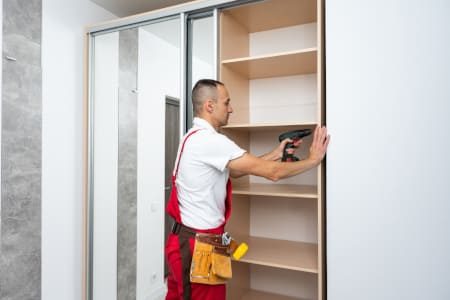
Custom furniture & built-in wardrobes
Whether it’s a cupboard under the stairs, a book wall, or a custom-made bed: carpenters build furniture to the exact centimetre—ideal for small rooms, awkward corners, or special design requirements.
Price range: CHF 1,500–2,000 per linear metre for built-in wardrobes, simple furniture from approx. CHF 1,000, complex individual pieces significantly more.
Costs increase with elaborate interior layouts, high-quality woods (e.g. walnut), lacquered fronts, and concealed fittings. Custom-made furniture is particularly worthwhile when standard solutions do not fit or when you want maximum quality.
Wooden façades
Wooden façades create a warm, aesthetically pleasing appearance and improve thermal insulation.
Costs: CHF 250–500 per m² including substructure, insulation, and cladding. Price depends on wood quality (spruce is cheaper; larch & oak are more expensive), façade boards (profile, thickness), and insulation thickness. The higher the quality of the wood, the lower the future maintenance effort—a factor that saves money in the long term.
Roof structures & roof construction
Carpenters / joiners carry out the construction or renovation of roof structures. Renovation costs approx. CHF 150–250 per m²; complete renovation with insulation CHF 400–600 per m². Additional costs arise during conversion for interior cladding (CHF 50–80 per m²), floor coverings (CHF 100–200 per m²), or heating systems. A professional roof conversion is particularly worthwhile for energy renovations or when additional living space is required.
Wooden windows & wood-aluminium windows
New wooden windows create a warm living atmosphere and offer good insulation values.
Costs: approx. CHF 450 per m² for double glazing, CHF 490 per m² for triple glazing. Wood–aluminium combinations are more expensive but extremely low-maintenance. Price factors include glazing, sound insulation, security features, and the number of panes. Carpenters are ideal when you need custom dimensions, special designs, or repairs.
Carports & outdoor structures
Carports, patio covers, or wooden pergolas are classics in carpentry. A wooden carport costs CHF 4,000–10,000, depending on wood quality (spruce is cheaper, larch more durable), roof type, foundation, and size. Prices increase for custom shapes, integrated storage rooms, or metal/glass elements.
Cost examples from real projects
Renovating a small kitchen (approx. 14–22 m²)
A simple kitchen renovation by a carpenter includes new fronts, adaptations to existing cabinets, small structural changes, and the replacement of individual appliances. For a compact kitchen, costs usually range between CHF 5,000–10,000, depending on materials (veneer vs. solid wood), appliances, and labour. Costs rise significantly if drawer systems are replaced or appliances need to be fully integrated.
Built-in wardrobe under the stairs
A custom-made built-in wardrobe precisely adapted to the slope costs CHF 3,000–5,000 depending on wood type, fittings, and interior layout. Pull-out systems, lighting, soft-close mechanisms, or high-quality fronts increase the price. The big advantage: the carpenter makes perfect use of even difficult angles and maximises storage space.
Converting the attic (partial carpentry work)
During an attic conversion, the carpenter handles interior cladding, custom furniture, flooring, doors, and in some cases the substructure. For a medium attic conversion (20–35 m²), you should expect carpentry costs of CHF 25,000–40,000, depending on wood type, insulation, wall cladding, and the extent of custom furniture. Complex roof slopes and difficult access significantly increase the workload.
Renovating a wooden façade
For a newly insulated wooden façade including insulation, substructure, and installation, costs usually range from CHF 250–500 per m². For a single-family home with 80–120 m² of façade area, this results in a total budget of CHF 25,000–50,000. Pricing depends on wood quality, façade boards (e.g. larch vs. thermowood), and the complexity of detailing and connections.
Carpenter or DIY store – what really pays off
When DIY is possible
Small repairs, simple shelving, or furniture made from standard flat-pack kits can easily be done yourself. Simple adjustments such as oiling a worktop or shortening doors also work well for DIY enthusiasts—provided you have the right tools. DIY is especially worthwhile when appearance is secondary or when no millimetre-precise accuracy is required.
When a carpenter is essential
As soon as custom-made work, complex built-ins, load-bearing components, or high-quality materials are involved, DIY reaches its limits. A carpenter guarantees a precise fit, durable construction, and professional installation. This is particularly important for kitchens, built-in wardrobes, doors, roof structures, wooden façades, or complex interior construction.
When DIY-store solutions make sense
For standard products such as simple shelving, prefabricated cabinets, floors for self-installation, or inexpensive outdoor solutions, a DIY store can be the better choice. You save money—but must accept compromises in material quality, fit accuracy, and durability.
Where custom carpentry clearly wins
Wherever storage space needs to be optimised, special dimensions are required, or the result should look high-end, a carpenter’s solution is unbeatable. Custom-made furniture uses every centimetre, adapts perfectly to the space, and significantly increases both value and longevity. Examples include built-in wardrobes under stairs, custom kitchens, furniture for attic conversions or sloping ceilings, high-quality wooden windows, or precisely manufactured wooden façades.
Common mistakes in carpentry projects
Choosing the wrong wood
Many people underestimate how much wood types differ—in price, hardness, moisture behaviour, and maintenance requirements. If a sensitive wood is used in a kitchen or bathroom, warping, stains, or damage can occur quickly. Always seek advice on which wood is truly suitable for its intended use.
Underestimating costs
With carpentry work, costs arise not only from materials, but also from planning, manufacturing, machine work, and installation. Anyone who looks only at material prices is likely to face surprises later. A realistic upfront cost estimate prevents budget issues and unnecessary compromises.
Inaccurate measurements
Even a few millimetres of deviation can be enough for a built-in wardrobe not to fit or a kitchen to be misaligned. Incorrect measurements lead to rework, delays, and additional costs. Professionals always measure several times—in case of doubt, the carpenter should take measurements on site.
Cheap fittings
Drawer runners, hinges, or connection fittings are often underestimated. Cheaper versions carry less weight, wear out faster, and cause doors or drawers to sag or misalign over time. High-quality fittings significantly extend the lifespan of furniture.
Lack of planning for use
A piece of furniture can look beautiful—but be impractical if storage space, accessibility, or load requirements are not considered. Before starting a project, clearly define: What must the furniture store? Which items will be kept there? How will it be used?
Installation not considered
Even perfectly manufactured furniture is useless if it does not fit through stairwells or cannot be installed on site. Every project should be checked early on for delivery logistics and whether additional work such as dismantling or adjustments will be required.
Is a carpenter worth it—and when?
A good carpenter is always the best choice when standard solutions reach their limits or when you want long-lasting quality. Custom-made furniture, interior construction, or complex renovations are investments that pay off through optimal use of space and durability. If you only need simple shelving, small cabinets, or temporary solutions, DIY-store products are often cheaper. The rule is simple: the more individual, high-quality, and long-lasting a project should be, the clearer the case for a professional.
Get carpentry quotes
Free & without obligation
With just a few clicks, receive up to three carpentry quotes from vetted specialist companies in your area.